


Key Takeaways
- Understand sourdough by looking at how the starter, flour, hydration, temperature, and fermentation time work together.
- Slow fermentation helps develop the loaf’s flavour, aroma, crust, and internal structure.
- Watch starter activity, dough strength, and temperature rather than relying only on a fixed timetable.
- Bulk fermentation, shaping, proofing, scoring, and steam baking all influence the final loaf.
- Look for balanced acidity, a developed crust, and a crumb that feels light, set, and pleasant to chew.
Introduction
Sourdough is a slow-fermented bread made with a natural starter instead of fast-acting commercial yeast. This starter is a living culture of flour, water, wild yeast, and naturally occurring bacteria, which help the dough rise and develop structure over time.
Unlike commercial bread, sourdough depends on patience, timing, hydration, flour quality, and temperature control.
We look at how these factors work together throughout the process, beginning with the condition of the starter. A sourdough starter can be maintained for many years, with some cultures passed down through generations, although age alone does not determine the quality or flavour of the bread. How the starter is cared for, together with sourdough temperature, fermentation progress, shaping, and baking, all influence the flavour, crust, and crumb you experience in the final loaf.
What Makes Sourdough Different from Regular Bread?
Regular bread usually relies on commercial yeast, which works quickly and predictably. Sourdough uses a starter made from flour and water that has fermented naturally over time.
The microorganisms in the starter gradually break down starches and sugars, producing carbon dioxide that allows the dough to rise. This slower natural fermentation can create mild tanginess, a deeper aroma, a firmer crust, and air pockets that vary naturally across the loaf.
When you choose sourdough from a bakery in Singapore, look beyond the size of the holes or the colour of the crust. We pay attention to the loaf’s structure, aroma, acidity, and how the crumb feels when sliced and eaten.
Why Are More People Choosing Sourdough?
Sourdough has become a popular alternative to conventional white bread for people looking more closely at how their bread is made. Its longer fermentation process, use of a naturally maintained starter, and distinctive flavour can all influence that choice.
Some people also associate sourdough with a simpler approach to bread-making. At Alice Boulangerie, our sourdough breads are made without bread improvers or preservatives, while the dough is given time to ferment and develop naturally. Rather than treating sourdough as automatically “healthier” than every other bread, we believe it is more useful to consider the ingredients, fermentation process, and overall bread alongside your individual dietary needs.
The Role of the Starter in Sourdough
A sourdough starter is the foundation of the process. Bakers maintain it by regularly feeding it with fresh flour and water so that its yeast and bacteria remain active.
A healthy starter usually expands after feeding, forms visible bubbles, and has a pleasantly fermented aroma. Its strength influences how quickly the dough rises and how well the finished loaf holds its shape.
For us, starter care is not separate from the rest of the process. Our bakers take great care to keep our starters active and reliable from one bake to the next. This consistency gives us a dependable foundation for producing our sourdough while developing the distinctive flavours of our own range.
How Microorganisms Shape the Dough
Yeast produces carbon dioxide, which becomes trapped within the gluten network and forms air pockets. This affects how open, light, or compact the crumb feels when you cut into the loaf.
Naturally occurring bacteria create organic acids that influence the dough’s flavour, aroma, and elasticity. These acids help give sourdough bread its gentle tang and more developed eating experience.
The balance between yeast and bacteria varies according to the flour, hydration, temperature, and fermentation time. We therefore watch the dough itself rather than relying only on the clock. Volume, surface bubbles, elasticity, and strength help indicate whether fermentation is progressing as expected.
Why Hydration Matters
Hydration refers to the amount of water used in relation to flour. It affects how the dough handles and what type of crumb develops.
Higher-hydration dough is softer and more delicate. When handled well, it may create an open crumb with larger air pockets. Lower-hydration dough is firmer and easier to shape but often produces a tighter crumb.
More water does not automatically create better sourdough. We balance hydration with flour strength, fermentation, folding, and shaping. If the dough cannot support the additional water, it may spread or lose definition rather than producing a lighter loaf.
Why Flour Quality and Temperature Matter
Flour with sufficient protein develops a stronger gluten network, helping the dough retain gas during fermentation. Different flours also absorb water differently and can change the flavour and texture of the loaf.
Temperature affects fermentation speed. Warm conditions accelerate microbial activity, while cooler conditions slow it down. In Singapore’s warm climate, dough may ferment quickly if it is not monitored carefully.
Temperature control adds another layer to understanding sourdough. Cooler water, shorter room-temperature stages, or refrigeration may be used to keep the dough developing at a controlled pace. Our experienced and dedicated bakers measures the dough every time to ensure optimum bulk fermentation to take place.
How Bulk Fermentation Builds Structure
Bulk fermentation begins after the starter, flour, water, and salt are mixed. During this stage, the dough rises, develops flavour, and gains strength.
Sourdough is often strengthened through stretch-and-fold movements instead of intensive kneading. The dough is gently lifted and folded over itself, helping organise the gluten while retaining the gas produced during fermentation.
We assess surface bubbles, elasticity, volume, and movement before deciding when bulk fermentation is complete. These signs are often more useful than following a fixed number of hours.
Shaping and Final Proofing
Shaping creates tension around the outside of the dough, helping the loaf rise upwards rather than spread outwards. The baker must create enough support without pressing out too much gas.
The shaped dough then undergoes final proofing at room temperature or in the refrigerator. A cold proof slows fermentation and can make the dough easier to score.
At this stage, we look for enough strength to support the loaf without forcing out the air developed earlier.
Under-proofed dough may bake unevenly, while over-proofed dough can lose strength and spread. Careful timing is therefore essential.
Baking Sourdough with Steam
Sourdough needs steam early in baking because moisture keeps the surface flexible while the loaf expands. This helps support oven spring before the crust sets.
The dough is usually scored before baking so that it opens in a controlled way. As the bake continues, the crust develops colour, structure, and a firmer exterior.
At Alice Boulangerie, we bake our sourdough in a German deck oven with an accurate steam function. This allows us to control steam during baking, support oven spring, and promote more even baking across each loaf.
Our sourdough is part of a wider bread and pastry selection shaped by the timing, temperature, and handling needs of each dough. The range includes Classic Sourdough, which can be paired with homemade Kombu Butter, as well as Cranberry Walnut Sourdough and Jalapeño & Cheddar Sourdough. Our sourdough breads are also made without bread improvers or preservatives, focusing on naturally fermented dough and carefully selected ingredients.
What a Well-Made Sourdough Loaf Looks Like
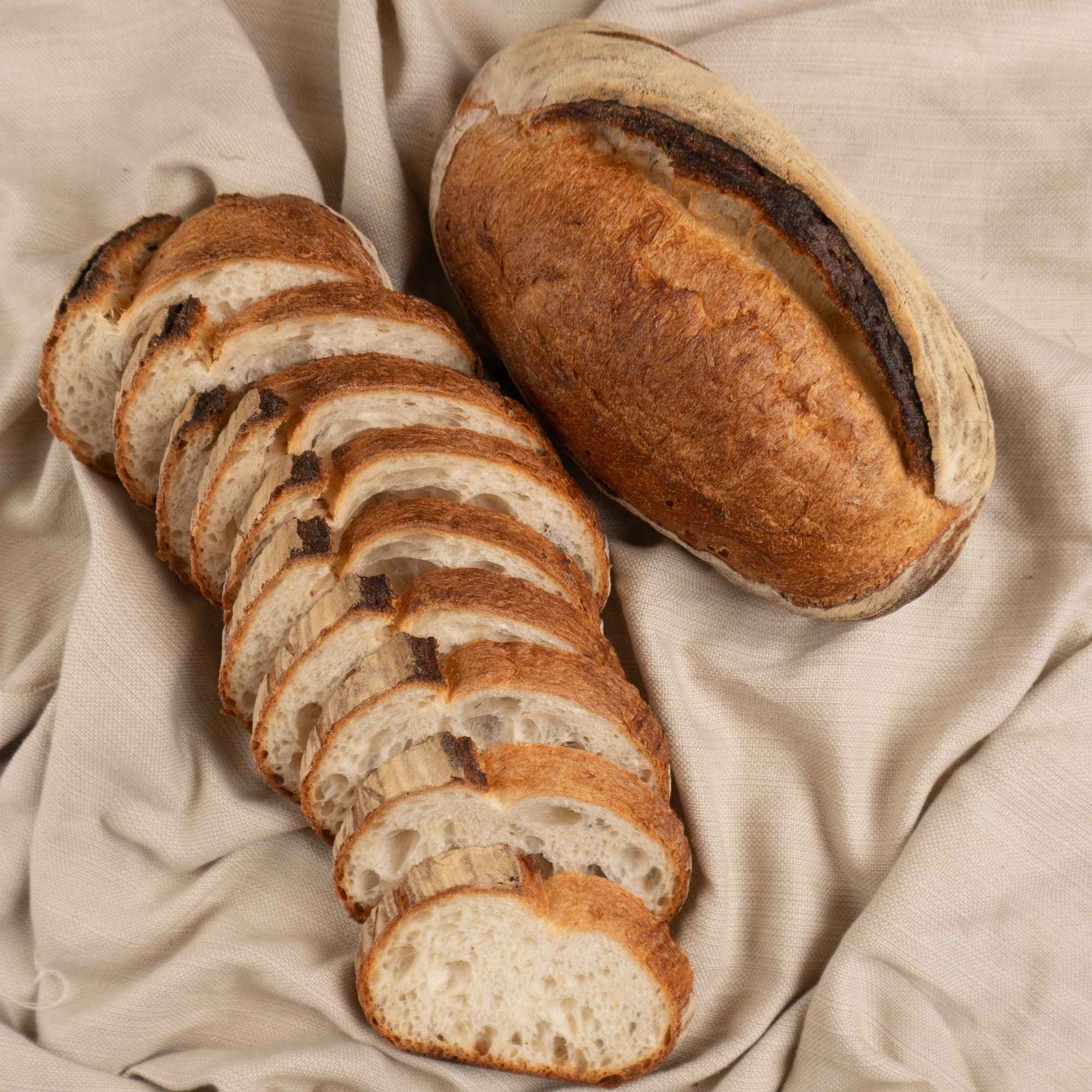
A well-made loaf should have a defined shape, controlled expansion, and a properly developed crust. When sliced, the crust should offer some resistance before giving way to a crumb that feels set, springy, and pleasant to chew.
Extremely large holes are not always a sign of quality. They may indicate uneven fermentation or poor shaping.
When we assess a loaf, we look for:
- A defined shape that holds after baking
- A developed crust without excessive hardness
- A crumb that feels set rather than gummy
- Air pockets distributed through the loaf
- Balanced acidity rather than an aggressively sour flavour
- Enough grain character and aroma to keep the flavour rounded
These sensory details often say more about sourdough quality than appearance alone.
Why Slow Fermentation Makes the Difference
Slow fermentation gives sourdough its character. It allows microorganisms to break down flour components, strengthen the dough, and create flavour complexity.
The process requires patience and adjustment, particularly when starter activity or temperature changes. For us, understanding sourdough means recognising that no single stage creates the finished loaf. Starter activity, hydration, flour, temperature, fermentation, shaping, and baking all need to work together.
For customers exploring a pastry shop in Singapore, Alice Boulangerie offers naturally fermented bread alongside French pastries, savoury bakes, and other freshly prepared pastries diners can enjoy for breakfast, gatherings, or everyday sharing.
Visit us at Alice Boulangerie to try our sourdough range and experience how slow fermentation, shaping, and baking come together in the finished loaf.