


Key Takeaways
- Kouign-Amann is commonly pronounced “kween ah-mahn”, with the name coming from the Breton words for cake and butter.
- This classic pastry uses laminated dough, butter, and sugar to create crisp caramelised edges and a rich, tender centre.
- Kouign-Amann differs from Croissants and Pain au Chocolat because it has a denser texture and a stronger caramelised flavour.
- A useful guide to French pastries can help you understand unfamiliar names, regional origins, and differences in pastry-making techniques.
- At Alice Boulangerie, you can explore Kouign-Amann alongside Croissants, Pain au Chocolat, and Shiopan for takeaway, delivery, breakfast, or gatherings.
Introduction
Kouign-Amann is one of those pastries that looks inviting on display but can feel slightly intimidating to say aloud. You may recognise its golden surface and folded layers, yet pause when you see the name written on a menu.
The pronunciation becomes easier once you understand where the name comes from and how the pastry is made. This focused guide to French pastries uses Kouign-Amann as a starting point, then compares it with familiar favourites such as the croissant, pain au chocolat, and Paris-Brest so you can choose by texture, flavour, and pastry style.
How Do You Pronounce Kouign-Amann?
Kouign-Amann is commonly pronounced as “kween ah-mahn”. The name comes from Brittany in north-western France, where “kouign” refers to cake and “amann” refers to butter.
Rather than trying to pronounce every letter, say the two words together smoothly: “kween ah-mahn”. You do not need to reproduce a perfect regional accent when ordering it. Saying the name clearly is usually enough for the person serving you to understand.
When our pastry team introduces less familiar French pastries to customers, pronunciation is often the first barrier. Once you know how to say the name, we can focus on the more useful question: what does Kouign-Amann actually taste and feel like?
What is Kouign-Amann?
Kouign-Amann is a traditional Breton pastry made from dough, butter, and sugar. Its name translates approximately as “butter cake”, although its structure is closer to a folded pastry than a conventional soft cake.
It is produced using laminated dough, where butter is enclosed within the dough and folded several times. Sugar is incorporated during shaping. As the pastry bakes, the butter helps separate the layers while the sugar caramelises around the surface.
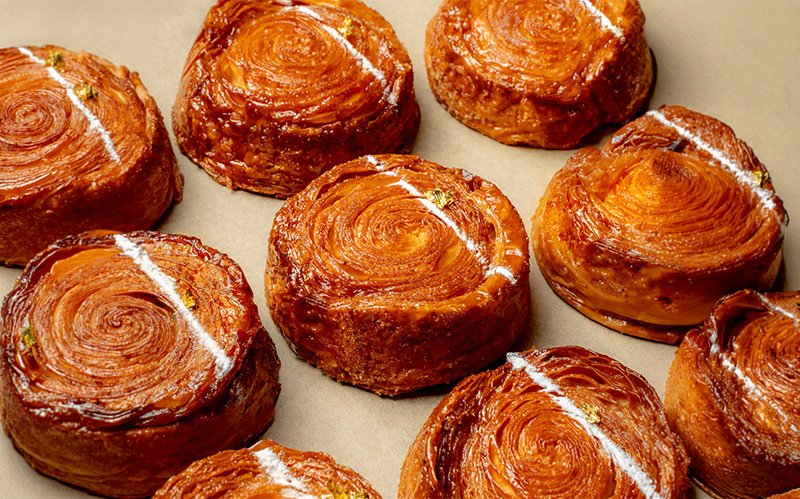
The result is a crisp, deeply golden exterior and a rich centre. Compared with a Croissant, Kouign-Amann tends to feel more substantial and offers a stronger contrast between caramelised edges and softer inner folds.
Why Kouign-Amann Looks so Distinctive
Kouign-Amann often has a structured, folded appearance that allows you to see how the dough has been shaped. Some versions are baked as individual rounds, while others have visible corners rising from the centre.
Its golden or amber colour develops as the sugar caramelises against the tin and around the exposed edges. Unlike pastries decorated with icing or cream, its visual appeal comes mainly from the dough preparation and baking process.
This makes it a recognisable caramelised pastry, especially when displayed beside lighter laminated bakes with paler layers or softer finishes.
How Kouign-Amann Compares with Other French Pastries
Kouign-Amann belongs to the wider world of French viennoiserie, but it offers a different experience from a Croissant or Pain au Chocolat.
- Croissant: Generally lighter and airier, with delicate layers and a soft interior.
- Kouign-Amann: Uses a related folding method, but added sugar gives it a firmer surface and stronger caramelised flavour.
- Pain au Chocolat: Also uses laminated dough, but is shaped around chocolate for a richer, more familiar centre.
- Shio Pan: A Japanese-style salted butter roll with a lightly crisp exterior, soft interior, and savoury, buttery flavour.
- Gourmet Buns: Offer a different eating experience through soft bread textures and a variety of fillings, making them suitable for those who prefer something more substantial.
At our pastry shop, we encourage you to choose according to the eating experience you prefer. You may want airy layers, crisp caramelisation, chocolate, or a softer cream-filled pastry or a savoury alternative such as Shio Pan or Gourmet Buns.
As this guide to French pastries shows, treats prepared with similar ingredients can still taste completely different depending on shaping, filling, sugar, butter handling, and baking method.
Why French Pastry Names Can Feel Difficult to Pronounce
French pastry names often refer to regions, shapes, ingredients, or preparation methods. Some, such as Croissant, have become widely recognised in English. Others remain unfamiliar because they retain regional words or sounds.
Kouign-Amann can feel especially challenging because the name comes from the Breton language rather than standard French. Its spelling may therefore appear unusual even if you know how to pronounce other French foods.
Learning these names adds context to your choice. You begin to understand where each pastry comes from and what you can expect when you eat it.
A Simple Way to Remember the Name
Connect the name to its meaning instead of memorising the spelling. “Kouign” means cake, while “amann” means butter. Remembering “butter cake” helps you associate the name with the pastry’s rich character.
You can also connect “kouign” with the English word “queen”, since the first sounds are similar. Say the second part softly as “ah-mahn”, then join the two sounds together.
How to Recognise a Fresh Kouign-Amann
A freshly prepared Kouign-Amann should retain a clear contrast between its exterior and centre. The outer edges should feel crisp, while the inside should remain tender rather than dry or tough.
Its surface should have an even golden or amber colour. A pale pastry may not have developed enough caramelisation, while an excessively dark surface may taste bitter.
When we look at the finished pastry, we pay attention to:
- A crisp, caramelised exterior
- A tender centre
- Visible folded structure
- An even golden-to-amber finish
- Richness without an overly greasy mouthfeel
Freshness also affects the sugar coating. Moisture gradually softens the exterior, so you may prefer to eat it on the day it is prepared or shortly after receiving your pastry delivery.
What to Pair With Kouign-Amann
Kouign-Amann can be enjoyed on its own, but its buttery sweetness pairs well with drinks that offer contrast. Black coffee, espresso, or lightly sweetened tea can balance the caramelised sugar.
When we put together a pastry selection for sharing, we also like to create contrast. Kouign-Amann can sit alongside lighter Croissants, chocolate-filled Pain au Chocolat, or a cream-filled pastry so your guests are not choosing between several items with the same texture.
For a more balanced selection, we may also recommend including savoury options such as Shio Pan or Gourmet Buns. The salted, buttery character of Shio Pan offers a contrast to Kouign-Amann’s caramelised sweetness, while Gourmet Buns provide a more substantial option for guests who prefer savoury flavours. This allows everyone to enjoy a selection that caters to different tastes and appetites.
Why Kouign-Amann Is Worth Trying
Kouign-Amann is worth trying when you want something richer and crisper than a conventional Croissant. Its appeal does not depend on elaborate toppings or fillings. Instead, it comes from the balance between dough, butter, sugar, folding, and baking.
It also shows how technique changes familiar ingredients. Butter and dough can create a light Croissant when laminated and shaped one way, while added sugar and different shaping produce the denser, caramelised character of Kouign-Amann.
A practical guide to French pastries should help you choose according to real preferences: light or rich, flaky or caramelised, chocolate-filled or cream-filled, familiar or more distinctive.
Conclusion
Alice Boulangerie offers contrasting pastry styles, including Kouign-Amann, the croissant, pain au chocolat, Shiopan and Gourmet buns. Seeing these options together allows you to consider how different doughs, shapes, fillings, and finishes affect the final texture.
You might choose a croissant for light, flaky layers, pain au chocolat for a chocolate-centred option, Paris-Brest for a cream-filled pastry, or Kouign-Amann for crisp, caramelised edges.
When choosing pastries in Singapore for yourself or selecting treats for friends and family, we can help you put together contrasting options according to the textures and flavours you enjoy. Our Kouign-Amann offers a richer, caramelised choice alongside lighter and cream-filled pastries.
We hope this guide to French pastries helps you decide which style appeals to you.
Ready to satisfy your cravings? Browse the full selection at Alice Boulangerie and place your order today!